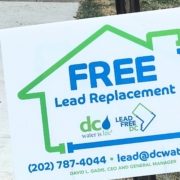
Reducing Lead in Drinking Water in Schools and Child Care Facilities
July 3, 2024
In August 2015, Dr. Hanna-Attisha, a pediatrician noticed that the percentage of her…

July 3, 2024
In August 2015, Dr. Hanna-Attisha, a pediatrician noticed that the percentage of her…

June 21, 2024
Children’s National and RESOLVE, a Washington, D.C.– based nonprofit specializing in collaborative process, launched a school-friendly…

May 22, 2024
Last spring, Children’s National and HSC Health Care System formed an early childhood…

April 1, 2024
April 1 is National Take Down Tobacco Day, led by the Campaign for Tobacco-Free Kids, during which youth advocates and communities…

December 11, 2023
Early childhood education is important for a child’s social, emotional and academic development and school…

November 29, 2023
The Biomedical Advanced Research and Development Authority (BARDA) collaborated with Johnson & Johnson Innovation – JLABS @ Washington…

April 19, 2023
School absenteeism has been a major concern for parents, caregivers, teachers, administrators, and health care providers…

February 8, 2023
In November 2022, Children’s National Hospital hosted a virtual Inaugural School-Friendly Health Systems (SFHS)…

October 24, 2022
Children’s National Hospital has proudly served the early childhood and K-12 school systems for more than two decades. We currently…

The world has spent the last few years grappling with a virus that, at its most acute, denies its host the ability to breathe. Sometimes lost in the sheer scope of the death and destruction wrought by SARS CoV-O-V2 is the terrifying struggle for air faced by those afflicted. There is something uniquely awful about the denial of that which sustains us, and more terrible when we imagine what a child must feel when faced with it. Sadly, such is the case with asthma, which is among the most common chronic diseases to affect children. Managing asthma has two primary components: controlling the disease and ensuring access to rescue medication in the event of an attack. In this year’s General Assembly session, lawmakers tackled the latter of these components with a bill to mandate that all public schools keep undesignated albuterol on-site.
Child advocates know that 80% of the factors that affect a patient’s health occur outside the care of a doctor. Environmental factors such as where they live, their household’s economic status, the quality of their school, etc. weigh heavily on a child’s opportunities for success. These factors manifest in a number of ways, but the prevalence of asthma offers a glimpse into the equity gap in public health. Asthma disproportionally affects the African American and Hispanic communities not because there is any sort of genetic predisposition to the disease, but because decades of structural inequity have contributed to factors that exacerbate the respiratory condition. Through no fault of their own, children who live near or below the poverty line are far more likely to be exposed to mold, smoke, poor air quality, along with other triggers.
Addressing those underlying inequities is a long-haul cause; there is not a ready-made solution to unwinding deep-rooted structural inequity in housing policy, though such a solution should be a priority of policy makers. Lack of long-term answers should not prevent us from pursuing acute solutions, however. A small step, but a meaningful one, was contemplated by House Bill 2019 (HB 2019).
Patroned by Delegate Delores McQuinn (D-Richmond), HB 2019 would require all Pre-K through 12th grade public schools in Virginia to maintain a stock of undesignated (or blanket prescribed) albuterol) on site. Let’s say that a student forgets to pack their rescue inhaler. Let’s say that this child attends school in a building that is more than 40 years old and learns in a dusty classroom. Let’s say that child has an asthma attack and reaches into their backpack only to find their rescue inhaler absent, what then? In the most favorable outcome, mom or dad is able to rush home and grab the inhaler and get it to the school before the asthma attack has gotten out of control. Even here, however, it is painful to imagine the trauma the child experiences during the time that elapses before their ability to breathe is restored.
It is worth noting that uncontrolled asthma is the leading cause of absenteeism in school aged children. Given the unprecedented potential for learning loss over the last year, addressing that adjacent issue takes on even greater importance. Thus, HB 2019.

Photo by Peter Idowu on Unsplash
The bill in question builds on legislation from last year and taken in total provides for a standing order to be written by the head of a local health department, gives immunity to school personnel who would administer the medicine, requires schools to stock albuterol, inhalers, and spacers, and provides funds to alleviate the financial burden on school systems for their initial investment.
This policy is not without complication, however. Schools play an instrumental role in a child’s development, and those who dedicate themselves to the profession of teaching are heroes in their own right, but they have expressed concerns over the scope of their job responsibilities when it comes to the administration of medicine. These are valid concerns, and they were vociferously expressed during the debates over the fate of HB 2019.
Progress is rarely a straight line. It sometimes demands compromise and it sometimes requires stubbornness and determination. Advocates for the bill opted for the latter, though with a tinge of the former, and ultimatelyultimately, they were successful in the passage of HB 2019. Legislating often involves placing the pros and cons on opposing sides of a scale and making a decision. Often that decision is not easy, and even more often the hardest part of the decision is opting for progress over the status quo. In this case, lawmakers (or, a majority of lawmakers in each chamber of the General Assembly) elected to support the measure and in so doing take a small step toward reducing uncontrolled asthma in children.
Make no mistake, HB 2019 is not going to solve the pernicious inequity in health outcomes derived from other policy areas like housing and education funding. Further, the COVID-19 pandemic has affected populations differently because of underlying issues that it has exacerbated, not created. Policy makers who do not see these deep inequities are either ignorant of them (a charitable conjecture), or they simply do not prioritize their alleviation. It is the job of child health advocates to ensure that these disparities are not ignored. It is imperative that they be seen for what they are, addressed head on, and resolved so as to ensure every child has the same opportunity for success.
Header Photo by Santi Verdi on Unsplash