

As the current school year ends, it is not too early for pediatric healthcare providers to connect with students and families about next year’s plan for daily school attendance. Across the country, more than 30% of children are chronically absent, defined as missing 10% or more of school days (1). Chronic absenteeism affects all students, with significant disparities by neighborhood, race and socioeconomic status. Pediatric providers can explore the rates of chronic absenteeism in their own communities using data from the U.S. Department of Education and FutureEd (2, 3). Educational attainment is a critical determinant of health. Regular school attendance increases the likelihood that a child graduates from high school, and high school graduates live 9 years longer on average and have better job security (4).
Chronic disease, mental health, and family health all impact a child’s ability to attend school. Absences due to mental and physical health challenges are one of the most common contributors to chronic absenteeism but health systems are an underutilized resource in developing solutions. Pediatric healthcare providers have numerous touchpoints with children in their early years and are trained to support the health and well-being of children and their families. Professional organizations are at the forefront of this work; the American Academy of Pediatrics and the National Academy of Sciences point to school attendance as one of four critical vital signs of child health (5, 6).

Credit: Used with Permission from Attendance Works
As an anchor institution and leading healthcare provider for children in DC and the region, Children’s National is committed to supporting school attendance as a School Friendly Health System (SFHS), one working to “ensure all children achieve optimal health and reach their full academic potential.” In 2019, Children’s National launched the Collaborative for Attendance Resources in Education and Health (CARE-H) program that combines the efforts of the District of Columbia Public Schools (DCPS), Children’s National, and parents/caregivers to support school attendance, encourage positive health and social outcomes, and support academic success. The CARE-H program strengthens connections between healthcare and education systems by using cross-sector data sharing to engage the health system in addressing absenteeism. When the health system receives attendance data from the school system, healthcare teams identify students who need an annual well-child visit and identify those who would benefit from extra support to address chronic health concerns posing a barrier to school attendance. Additionally, CARE-H is educating and training pediatric care providers to incorporate data sharing and attendance screening into clinical practice.
“The District of Columbia has experienced a substantial challenge, much like many urban cities with students being chronically absent. We are looking to leverage our partnerships and really figure out how we can approach this work in a very innovative way.” -Andrea Allen, Director, Attendance and Support Services, DC Public Schools, SFHS Chat and Chew Meeting, March 7, 2025
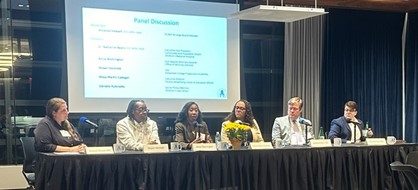
In 2025, the CARE-H team presented progress updates in several national forums including the 2025 School-Friendly Health Systems Chat and Chew Series, Kaiser Permanente 2025 Thriving Schools Summit, National Coordinating Committee on School Health and Safety meeting, All in for Attendance Symposium, and Children’s National 2025 Community Health Improvement Week. The CARE-H program has made substantial progress engaging students and families and has demonstrated a positive impact on school attendance. Funding from the Bloomberg American Health Initiative and United Health Foundation has been critical to launching and developing the CARE-H program. As state and local budgets are facing federal cuts, the Children’s National team is committed to identifying additional philanthropic sources to support this vital work for children.
Children’s National remains an active community partner by participating in local and national school health coalitions. The Every Day Counts! Taskforce, a partnership of diverse District of Columbia agencies and stakeholders that collectively advance and coordinate strategies to increase student attendance, counts Children’s National pediatricians and staff as its members. Children’s National will also support back-to-school events and health fairs this summer to ensure children have access to vaccinations and other health and social resources, so they are prepared for a strong start to the school year. Let Us Support Your School: Community Event Requests
Resources for Healthcare Providers
Resources for Families
References
[1] U.S. Department of Education Chronic Absenteeism
[2] U.S. Department of Education Chronic Absenteeism
[3] FutureEd Tracking State Trends in Chronic Absenteeism
[4] Robert Wood Johnson Foundation Health Policy Snapshot on The Relationship Between School Attendance and Health
Header image from Canva (Monkey Business Images)
About the author

Julia DeAngelo, MPH
Program Manager for School Strategies within the Child Health Advocacy Institute at Children's National Hospital

Jessica Weisz, MD
General Pediatrician within the Goldberg Center for Community Health at Children's National Hospital

Danielle G. Dooley, MD, MPhil, FAAP
Medical Director, Community Affairs and Population Health within the Child Health Advocacy Institute at Children's National Hospital

